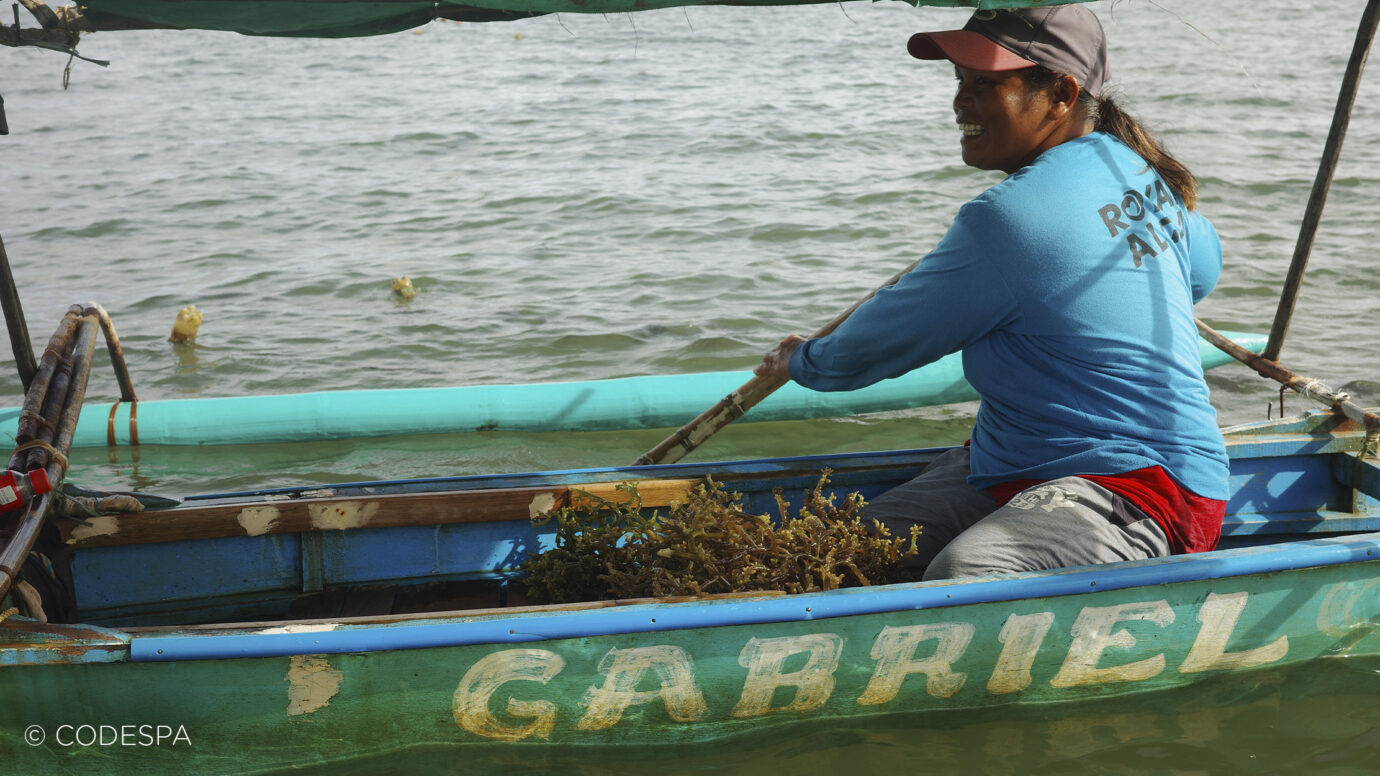
From the calm waters of Surigao del Sur province in southeastern Philippines comes an initiative that connects the sea with the land, the economy with the environment, and the present with the future of hundreds of families.
This is the Integrated Model of Circular Economy, Public Management and Environmental Efficiency of Mariculture (IMPACT) project, which focuses on seaweed as a driver of sustainable development, climate adaptation, and economic opportunities.
IMPACT began in 2025 and will run until 2027 in coastal and agricultural communities across the municipalities of Hinatuan, San Agustín, and Cortes, where many families rely on seaweed farming and agriculture for their livelihoods. The project aims to improve living conditions, strengthen incomes, and protect the sea and natural resources that sustain these communities. Overall, CODESPA supports 1,100 families, which represents around 6,600 people, including women, men and children.
Why Seaweed Matters
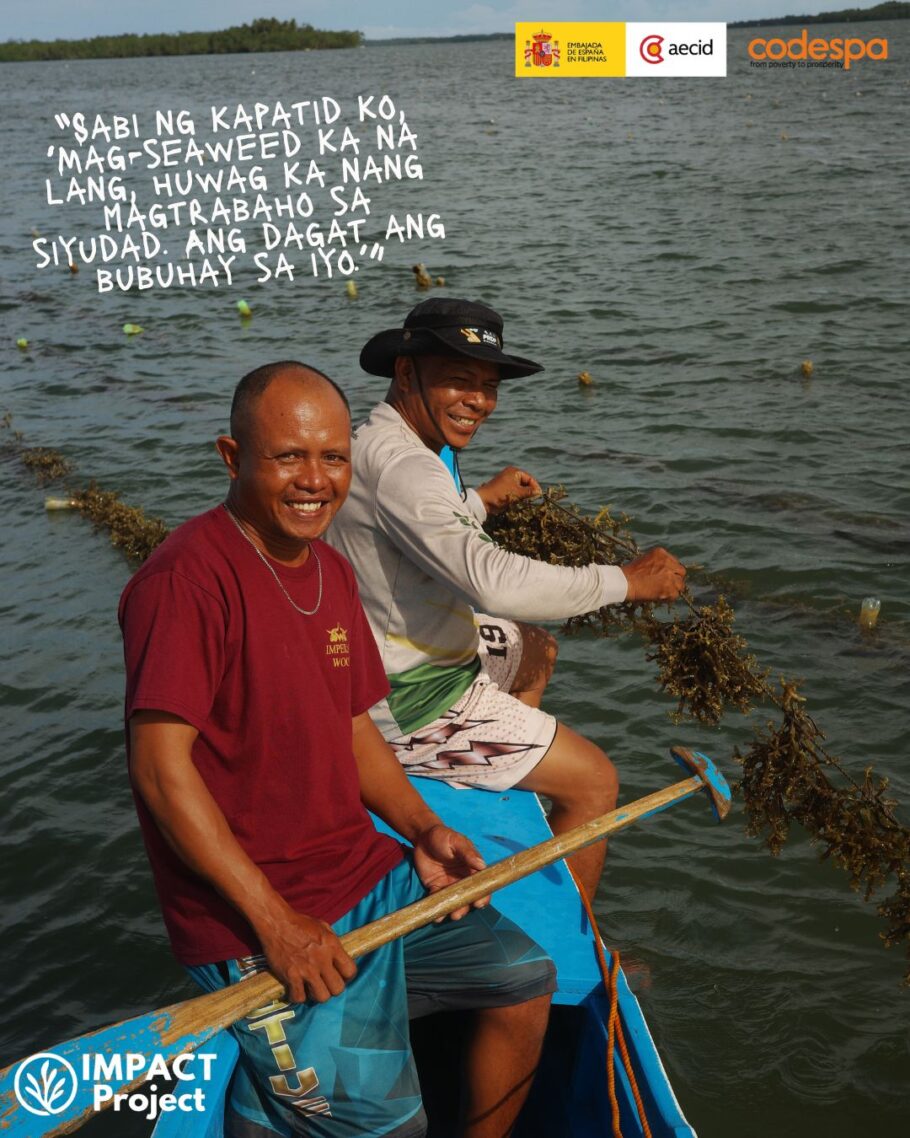
In these coastal areas, seaweed farming (known locally as guso) plays a key role in the local economy. Seaweed is used across sectors such as food, health, industry, agriculture, alternative medicine, and even renewable energy, and a significant portion is exported to other countries. Seaweed also has tremendous environmental potential: it grows without freshwater, soil, or chemical fertilizers, helping to protect marine ecosystems.
Yet, many families still face challenges: their incomes are unstable, they often receive unfair prices, and they depend on middlemen. Traditional farming methods, which don’t always respect growth cycles or use unsustainable packaging, affect both the quality of the seaweed and the natural environment, exacerbating the impacts of climate change.
With IMPACT, CODESPA offers an alternative: a comprehensive circular economy model that turns seaweed waste into valuable resources, creates jobs—especially for women—and improves soil health.
Circular Economy: Giving Seaweed Waste a New Life
What are these “seaweed residues”? They are parts left over after drying or processing that normally cannot be sold: broken leaves, fragments that don’t meet market standards, or leftovers from extracting other products. Although they cannot be sold, they are still rich in nutrients that plants need to grow.
Instead of being discarded, producers transform them into biofertilizers and biostimulants, which together form bioinputs:
- Biofertilizers: a fertilizer material containing living microorganisms which, when applied to seed, plant surfaces, or soil, colonizes the rhizosphere or the interior of the plant and promotes growth by increasing the supply or availability of primary nutrients to the host plant.
- Biostimulants: any substance or microorganism that when applied to plants or soil, it stimulates and enhances physiological processes, nutrient efficiency, abiotic stress tolerance and/or crop quality traits regardless of its nutrient content.
- Bioinputs: refer to biologically derived agricultural products such as biofertilizers, biostimulants, and biopesticides that are intended to enhance plant growth, soil fertility, or crop protection.
These bioinputs are applied to crops like rice, vegetables, or bananas, increasing productivity: crops grow faster, produce healthier fruits, and require less expensive chemical fertilizers. By nourishing the soil, it stays fertile longer, closing the circular economy cycle: produce, reuse, transform, and produce again.
This way, what was once waste becomes an opportunity: farmers spend less, crops grow better, and demand for seaweed increases. As the quality and consistency of production improve, more buyers trust and want to purchase the seaweed. This generates higher incomes for coastal families and strengthens the local economy.
Women Leaders and New Enterprises
A core pillar of the project is strengthening women’s leadership and entrepreneurship. IMPACT will support 35 women-led associations focused on transforming seaweed residues into bioinputs.
To achieve this, they will receive access to tailored credit, training in business planning, and support to enhance their commercial skills, including marketing, product presentation, and negotiation.
Technical Support and Replicability
The project’s technical component is backed by Davao del Sur State College, which developed the formula for one of the biofertilizers and currently provides training to producers on how to produce, use, and market these bioinputs. The project also includes the development of a provincial roadmap to replicate this experience in other areas.
IMPACT also works from the land. Through demonstration plots, farmer training, soil quality analysis, and participation in trade events, the project promotes the use of bioinputs, soil restoration, and better climate adaptation for local agriculture.
First Steps
Two key milestones mark the start of this journey. In October 2025, CODESPA Philippines signed an agreement with the Local Government of Hinatuan, led by Mayor Tito A. Cañedo III. This partnership is a key alliance to promote environmental conservation policies, strengthen marine resource management, and ensure active local government participation in the project’s implementation.
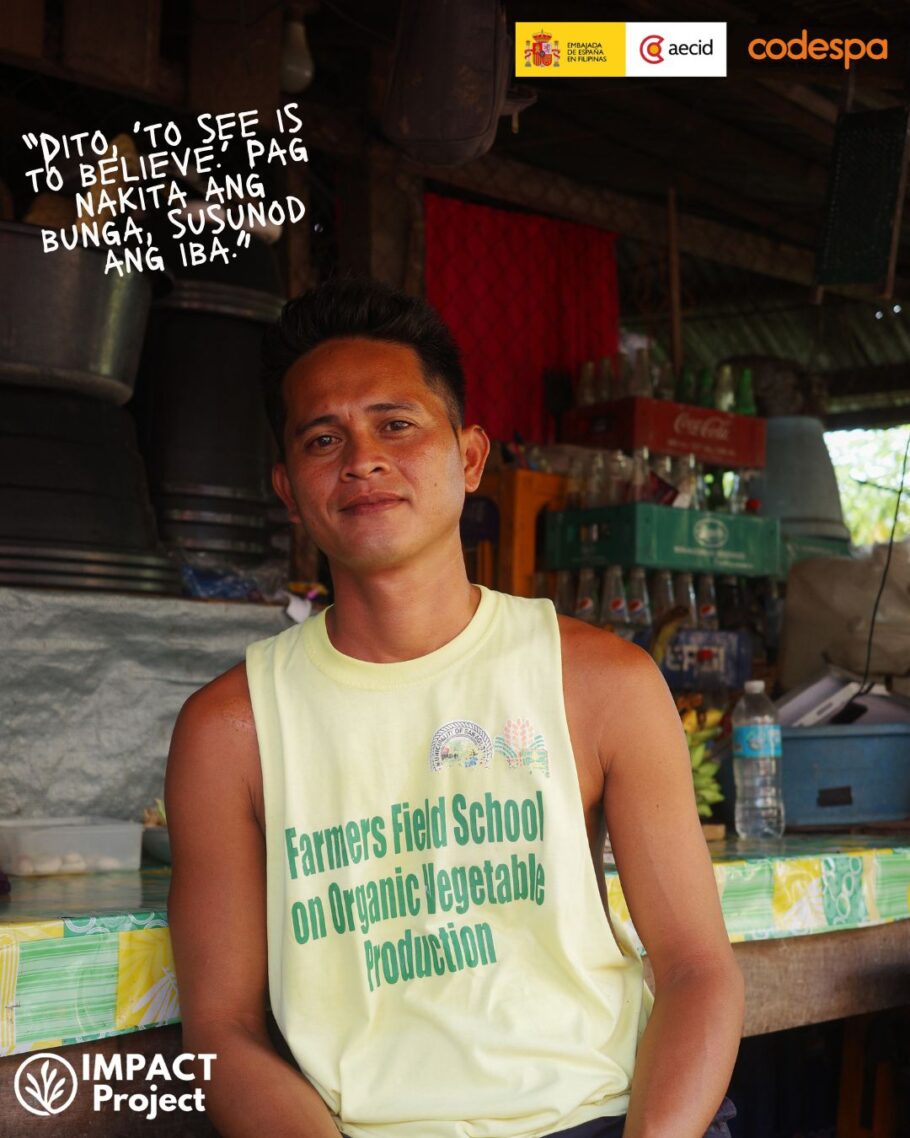
One month later, in November, the project launch event took place in Hinatuan. Seaweed farmers, agricultural producers, women’s groups, local authorities, and the project team gathered to celebrate IMPACT’s start and share the enormous potential of seaweed as a bridge between the sea and the land.
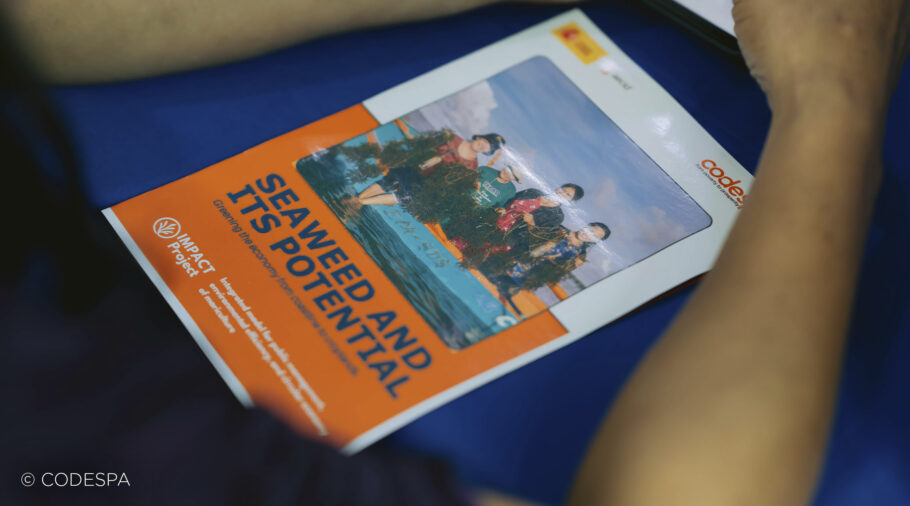
IMPACT is funded by the Spanish Agency for International Development Cooperation (AECID) and works with WWF Philippines as a strategic partner on the ecological and environmental component, especially in promoting public policies for marine ecosystem conservation.
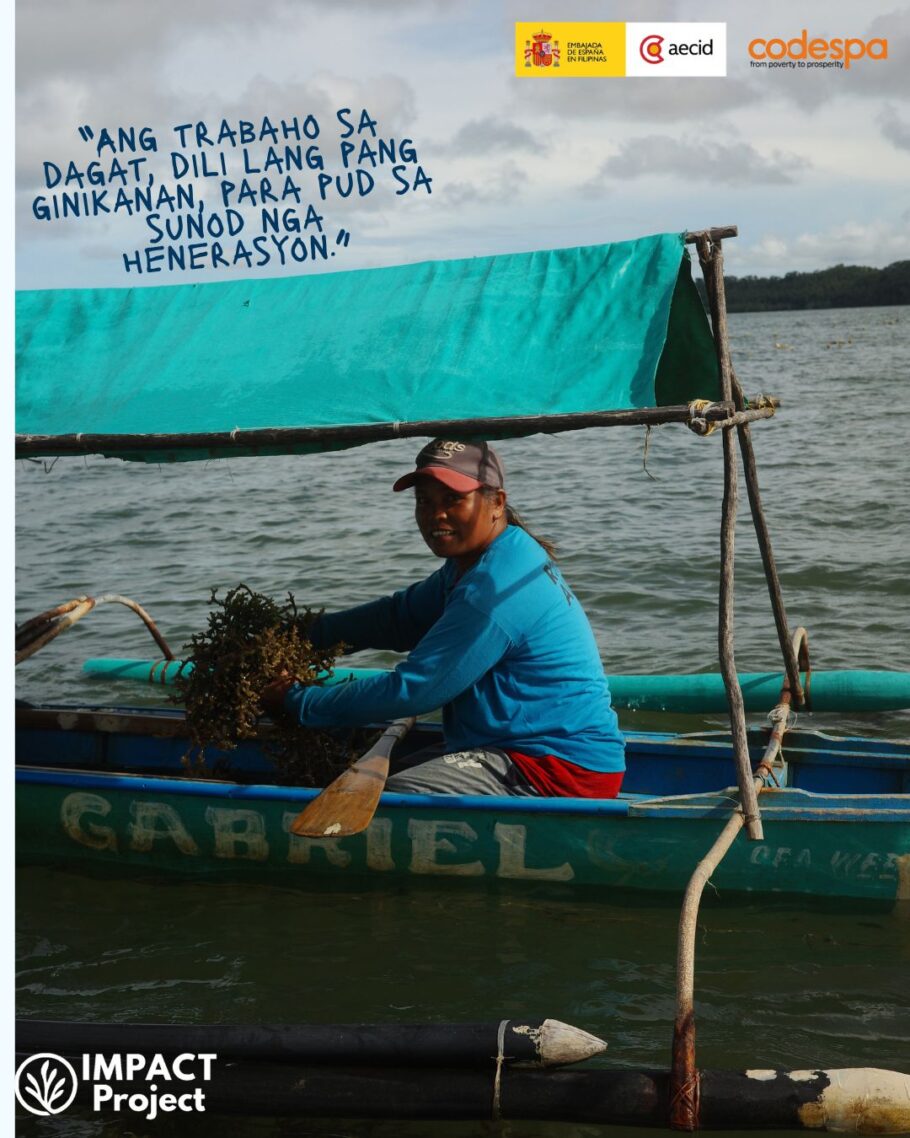
As some community members say: “Working at sea is not just for parents; it’s for the next generation too”. With IMPACT, seaweed becomes an opportunity to protect the environment, improve family livelihoods, and build stronger, more sustainable communities, today and in the future.
This project is funded by the Spanish Agency for International Development Cooperation (AECID):
Integrated Model of Circular Economy, Public Management and Environmental Efficiency of Mariculture (IMPACT)
2024/PRYC/000572
This publication has been produced in collaboration with Spanish Cooperation through the Spanish Agency for International Development Cooperation (AECID). The content is the sole responsibility of CODESPA and does not necessarily reflect the position of AECID.